





China's New Ro-Ro Vessel Capable of Carrying Six Aircraft Simultaneously Launched Successfully
Source:CCTV News
2026-06-08
On June 6, a roll-on/roll-off (Ro-Ro) vessel built in China for transporting aircraft components was successfully launched at the Wuchang Shipyard of China State Shipbuilding Corporation (CSSC). Once delivered, the vessel will primarily be used for transporting aircraft parts.
Expected Delivery in November, Mainly for Aircraft Component Transport
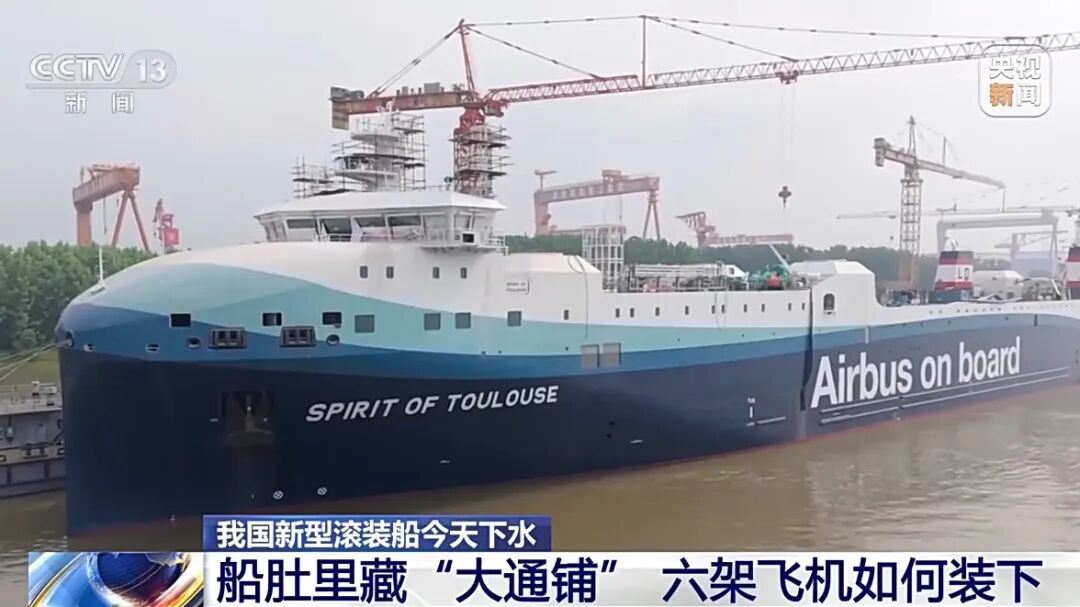
The Ro-Ro vessel has an overall length of approximately 169 meters and a beam of 23.32 meters. It is designed and fitted with six rotor sails, resembling chimneys, along its sides. Made from aviation-grade lightweight materials and optimized through aerodynamic design, these sails can significantly enhance the vessel's fuel efficiency and economic performance. Furthermore, the vessel employs methanol and diesel dual-fuel technology, enabling sulfur-free emissions and reducing nitrogen oxide emissions by over 80% compared with traditional fuel oil, meeting the latest emission standards set by the International Maritime Organization.
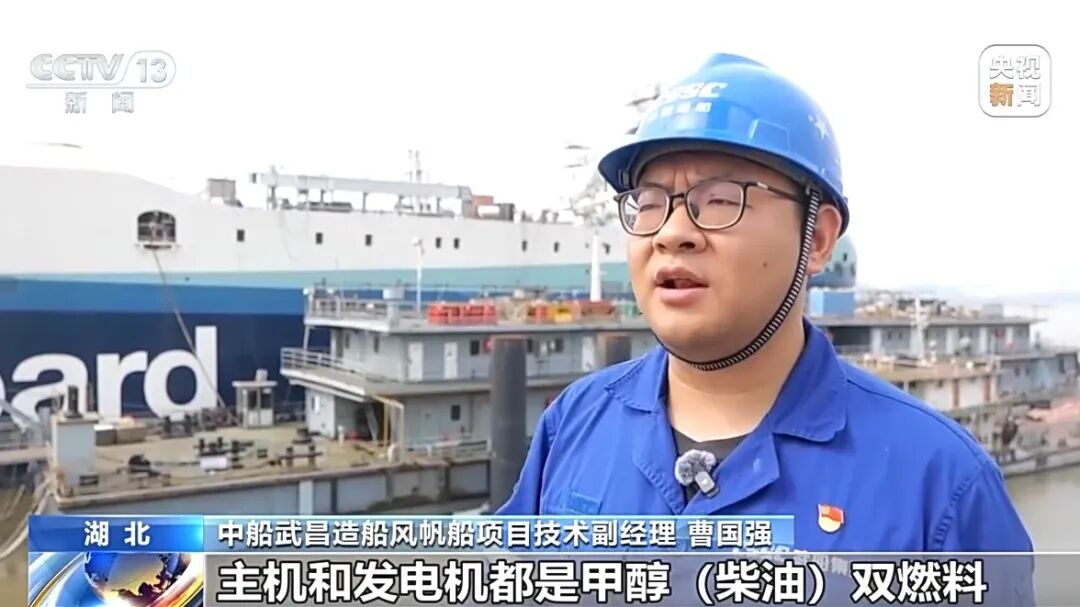
Cao Guoqiang, Deputy Technical Project Manager for the sailing ship project at CSSC Wuchang Shipbuilding, stated: "The main engine and generators are all methanol-diesel dual-fuel. If the shipowner uses green methanol during operations, near-zero carbon emissions can essentially be achieved. Currently, we have an order for three vessels of this type, and we expect more customized ship orders like this in the future."
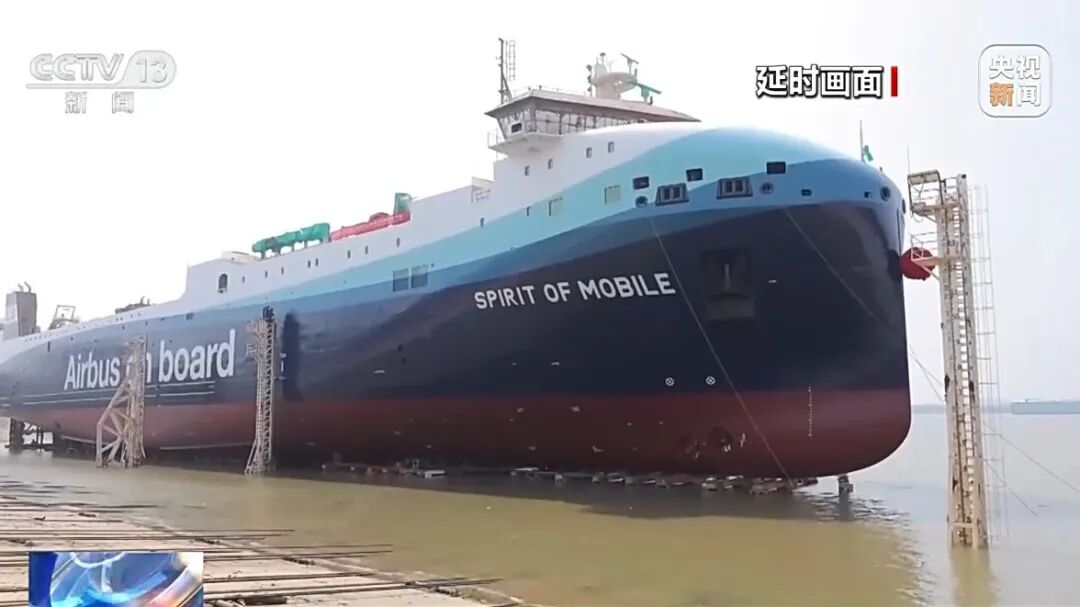
Additionally, the launch method for this vessel is distinctive, employing an inclined cradle launching system that allowed it to enter the water as smoothly as taking an elevator. Ship launching is a critical step in the shipbuilding process, and the quality of the technique directly affects the vessel's integrity. Compared with floating-out launches requiring large dry docks, this inclined cradle method does not need a large dock, has lower site requirements, and enables faster turnaround.
According to reports, after launch, the vessel will undergo functional testing of equipment including the engine, propeller, and electrical systems at the quayside. It is scheduled for official delivery in November this year and will then primarily be deployed on transatlantic aircraft component transport operations.
A "Large Open-Plan Cabin" in the Ship's Belly: How Six Aircraft Fit Inside
The vessel's cargo hold features a through-deck design with a total area exceeding 2,600 square meters—larger than six basketball courts—and a clear height of 8 meters, roughly equivalent to three storeys. The total cargo hold volume surpasses 20,000 cubic meters, comparable to nine standard swimming pools, and is specifically tailor-made for oversized cargo such as aircraft components.
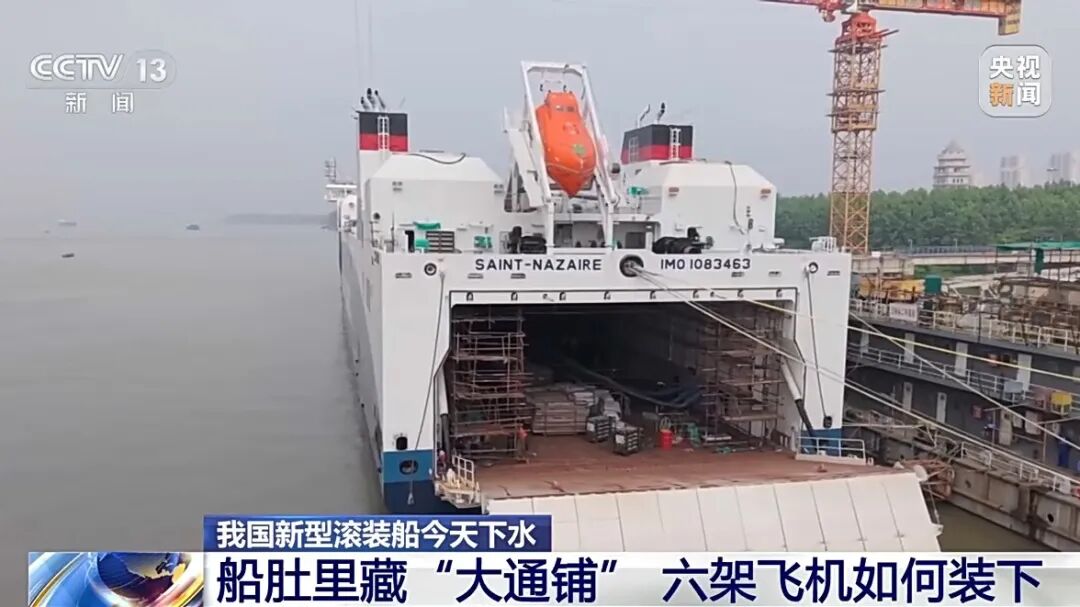
Large items like wings and fuselage structures will first be secured onto specialized trailers, which then drive directly into the cargo hold via a stern ramp. Inside, dedicated securing devices lock the trailers firmly in place to ensure transport safety.
Moreover, beyond just transportation, the vessel is equipped with a powerful environmental control system capable of real-time regulation of the air within the over 20,000-cubic-meter cargo hold, meeting the stringent requirements for temperature, humidity, and salt content during aircraft component transport.
Six "Wind Cylinders" Propel the Ship, Saving Fuel and Reducing Carbon
The six rotor sails, each standing 35 meters tall, are evenly distributed along both sides of the hull. Their arrangement required meticulous consideration: they must avoid interfering with oversized cargo handling routes, minimize sail-to-sail interference, and precisely account for the vessel's center of gravity and stability to ensure smoother sailing.
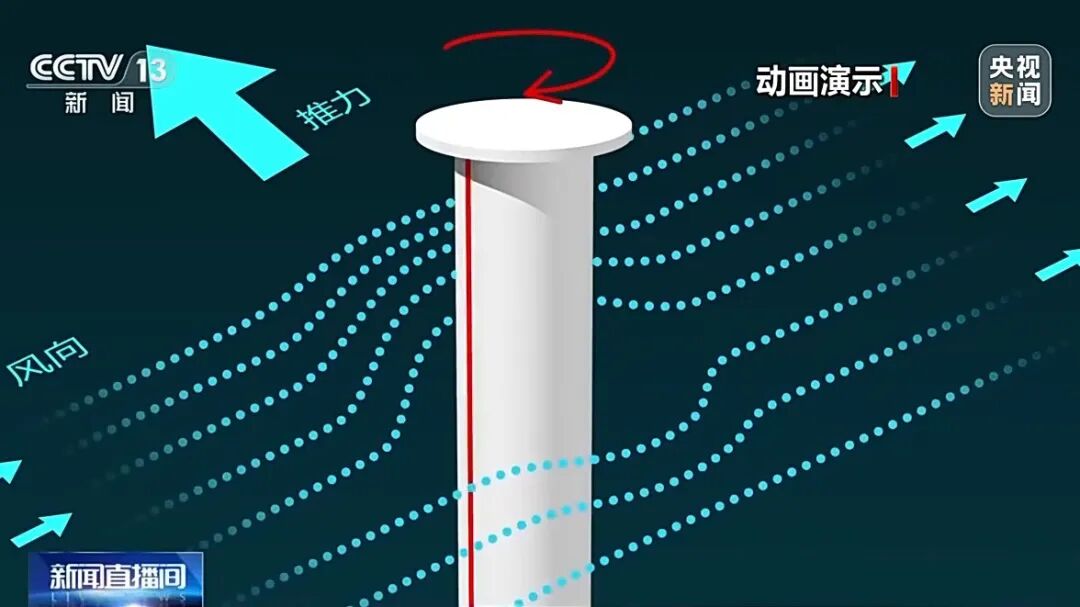
Experts explain that the sails save fuel through a principle known as the "Magnus Effect." An electric motor drives the cylindrical rotor to spin rapidly, causing the rotor to interact with the surrounding airflow and generate a pressure differential, thereby producing auxiliary thrust to help propel the vessel.

Cao Guoqiang, Deputy Technical Project Manager, elaborated: "Installing sails on a vessel is related to the ship's performance, its sailing routes, and the natural environmental conditions along those routes, such as wind speed and direction. The reason this vessel has six sails is linked to the fact that it transports large cargo but requires relatively lower deadweight capacity. This also allows for greater wind utilization efficiency to reduce carbon emissions. Based on prior calculations, the six sails could theoretically reduce carbon emissions by approximately 1,000 tonnes and save 20% in fuel consumption annually."
Hot News