





Another "10,000-Car" Car Carrier Delivered!
Source:CNSS
2026-06-11
Recently, the Glovis Lighthouse, an 10,800-CEU LNG dual-fuel Pure Car and Truck Carrier independently developed and designed by SDARI and constructed by Shanghai Waigaoqiao Shipbuilding, was successfully delivered.
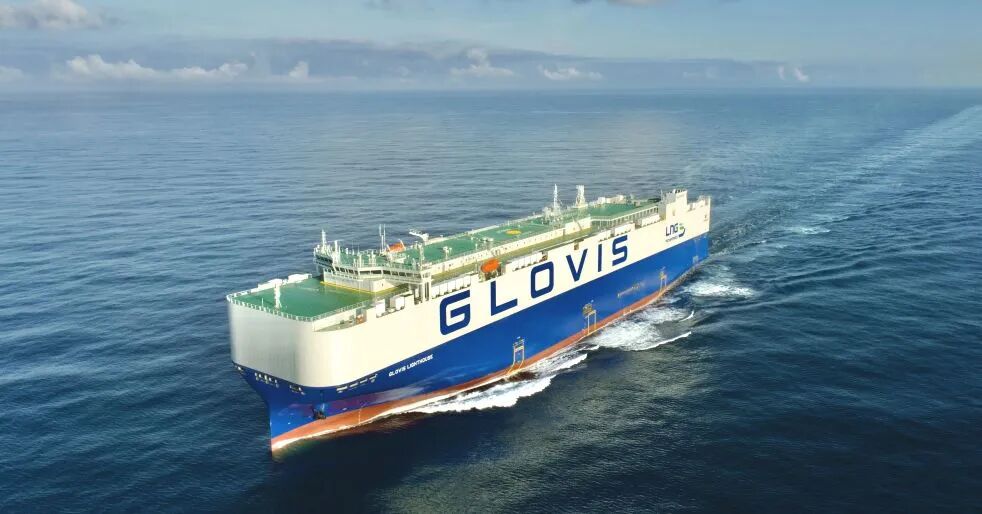
The vessel was tailor-designed for Seaspan and is a key member of the world's first 10,000-CEU-class PCTC series. Earlier in April this year, the Glovis Leader, also designed by SDARI and the world's first 10,800-CEU LNG dual-fuel PCTC, was named and delivered.
The Glovis Lighthouse has an overall length of 230 meters and a moulded breadth of 40 meters, with a height from the keel to the main deck of approximately 48 meters. Its structural draft is 10.5 meters and it can reach a service speed of 20 knots. The vessel features 14 vehicle decks, including 5 hoistable decks, enabling flexible loading of various types of new energy vehicles, such as electric, hydrogen, CLNG, and LPG vehicles, as well as heavy commercial vehicles and other diverse vehicle types. With a maximum capacity of 10,800 vehicles, it is currently the world's largest and most technologically advanced ultra-large PCTC.
Based on precise scientific dimensional matching and optimized hull line design, the vessel's performance has been comprehensively enhanced. It possesses the capability to call at major RoRo ports worldwide, fully meeting the demands of modern automotive supply chains for rapid turnaround, while achieving an excellent balance between carrying capacity, operational efficiency, and navigational performance.
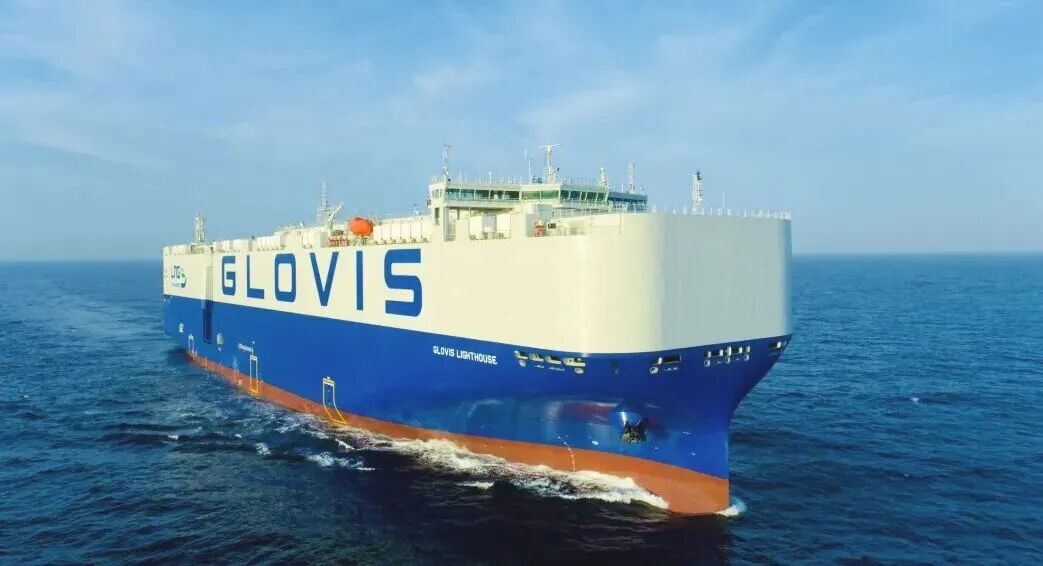
The Glovis Lighthouse integrates a domestically produced high-pressure LNG Fuel Gas Supply System with an Everllence dual-fuel main engine and is equipped with an Exhaust Gas Recirculation system, with all indicators fully compliant with the IMO Tier III standards—the world's most stringent environmental requirements. Meanwhile, to align with the trend toward zero-carbon shipping, the vessel has been granted ammonia- and methanol-fuel ready class notations, thereby reserving ample space and flexible solutions for the future adoption of green, low-carbon, and even zero-carbon fuels.
Hot News