





World's Largest Battery-Powered Container Ships Headed to Chinese Shipyard
Source:CNSS
2026-06-16
Eitzen Group is moving forward with its plan to build two electric container ships. On June 12, the group confirmed it has placed an order with a Chinese shipbuilder for two 900-TEU feeder vessels, which will be constructed by Zhejiang Dongpeng Shipyard. The first vessel is expected to be delivered in 24 months, followed by the second in 27 months.
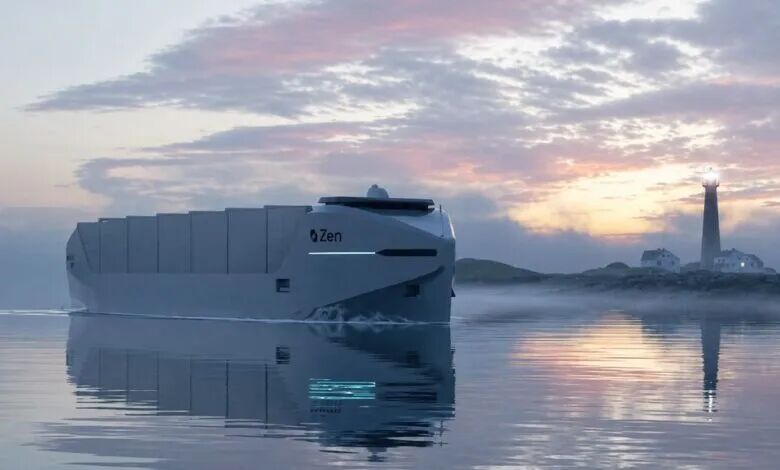
Eitzen Group stated that this order will drive the modernization of short-sea shipping and accelerate the transition to battery-powered vessels, with its subsidiary Zen taking the lead.
Last June, Eitzen Avanti, a group subsidiary, secured a shipbuilding subsidy of approximately NOK 200 million (around $21 million) from Enova, a funding agency under the Norwegian Ministry of Climate and Environment. This funding is designated for vessel design and the development of the necessary electrification infrastructure.
These two ships will be among the largest electric container ships ever put into commercial operation, and they will be used to establish an electric freight corridor. Zen plans to operate the vessels in Nordic waters, connecting ports across Northern Europe. The route will link Hamburg, Gothenburg, and Oslo, aiming to create a brand-new green shipping corridor for the region.
The vessels will feature an electric propulsion system with battery capacities exceeding 100 MWh, offering a range of 500 to 600 nautical miles. The batteries will be manufactured at a facility in Tønsberg, Norway, and are reportedly twice as energy-dense by volume as comparable solutions. They are also fully waterproof and designed to withstand permanent submersion.
Fridtjof C. Eitzen, Co-founder and CEO of Zen, said: “Electrification is no longer a concept of the future. On select routes, electric shipping is becoming commercially viable. Zen was established to lead this transition and build the infrastructure needed to scale up electric shipping.”
This project is one of seven electric vessel initiatives that received funding from Enova in June 2025. The government fund is dedicated to promoting zero-emission transport solutions, with a total allocation of NOK 363 million (approximately $38.17 million).
Hot News