






Norway Invests Over $130 Million to Build 10 More Green Vessels, Creating the World's Largest Zero-Emission Fleet Testing Ground
Source:CNSS
2026-06-23
Norway is cementing its position as a leader in clean shipping through sustained financial commitment. Enova, a funding agency under the Norwegian Ministry of Climate and Environment, has recently announced the allocation of over $130 million to seven domestic maritime enterprises, supporting orders for ten zero-emission newbuildings spanning three technology pathways: battery electric, hydrogen fuel, and ammonia fuel.
Combined with 22 green vessels already under construction, Norway is progressively building the world's largest testing ground for a zero-emission fleet, providing real-world samples for global shipping decarbonisation.
Electric Vessels Bloom Across Multiple Sectors: Containerships, Cruise Ships, and Specialised Vessels Advance in Tandem
This funding round has been strategically targeted across different vessel types and fuel value chains, with electric vessels receiving particularly prominent support:
Zen has secured Enova backing for the second consecutive year, receiving a further $20 million to build two battery-electric containerships. The first two vessels have reportedly already been ordered at Zhejiang Dongpeng Shipbuilding. Equipped with a 100 MWh battery pack, they are expected to enter commercial operation in 2029—at which point they will be among the world's largest battery-powered containerships.
Nordic Sea Concept has been awarded $8.6 million to develop an all-electric cruise ship with a 20 MWh battery pack, dedicated to sightseeing routes in the Norwegian fjords, promising zero-emission tourism in sensitive waters.
Live fish carrier specialist Seistar secured $13.6 million to construct a fully electric processing vessel and shoreside charging infrastructure. This will fully decarbonise the transport and processing stages of aquaculture, eliminating the ecological impact of previously diesel-powered vessels on the fjord environment.
Hydrogen and Ammonia Fuel: Targeting the Upstream Value Chain
In the hydrogen and ammonia fuel domain, Enova has committed approximately $80 million, prioritising support for the front end of the supply chain to capture the upstream value chain:
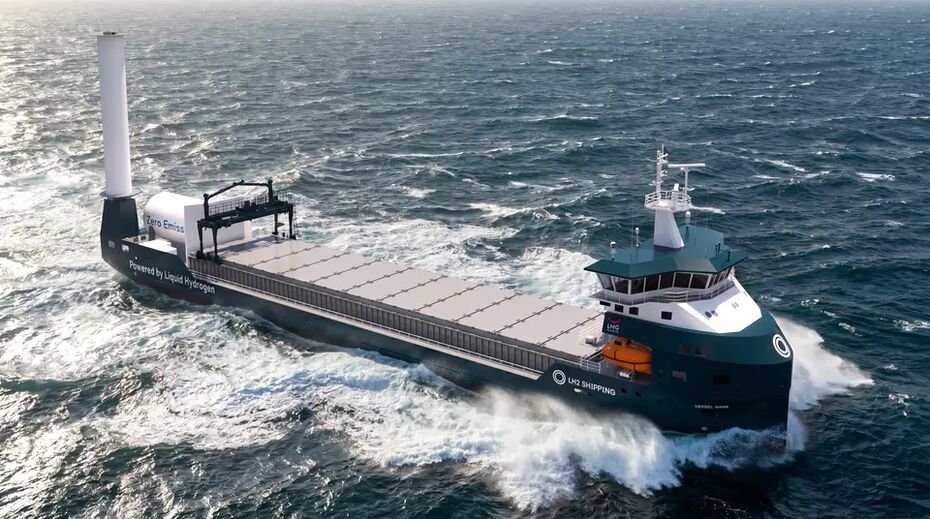
LH2 Shipping has received $35 million to order two liquid hydrogen-powered bulk carriers.
Bergen Tankers has been granted $44 million to construct an ammonia-powered tanker. Norwegian state energy company Equinor has already committed to a long-term charter, providing a stable demand anchor for the commercialisation of ammonia fuel.
According to Enova's calculations, once all the above projects are fully operational, they will collectively reduce annual CO₂ emissions by more than 46,000 tonnes. While this figure may appear negligible against the backdrop of total global shipping emissions, its significance lies elsewhere. As Rune Holmen, Acting CEO of Enova, stated: "These projects are paving the way for the structural transformation of the shipping industry. Their value lies in validating the feasibility of the technology and the business model, rather than in the emissions reduction numbers alone."
Norway's Fleet Composition Reflects Its Leadership
Norway's leading position is reflected not only in policy funding but also in its fleet composition. According to statistics from DNV, Norway has 3,785 registered vessels, of which 112 are zero-emission ships, accounting for 3% of the total. This proportion ranks among the highest globally, and with the majority of new projects scheduled for delivery within the next three years, that share is set to rise further.
Hot News